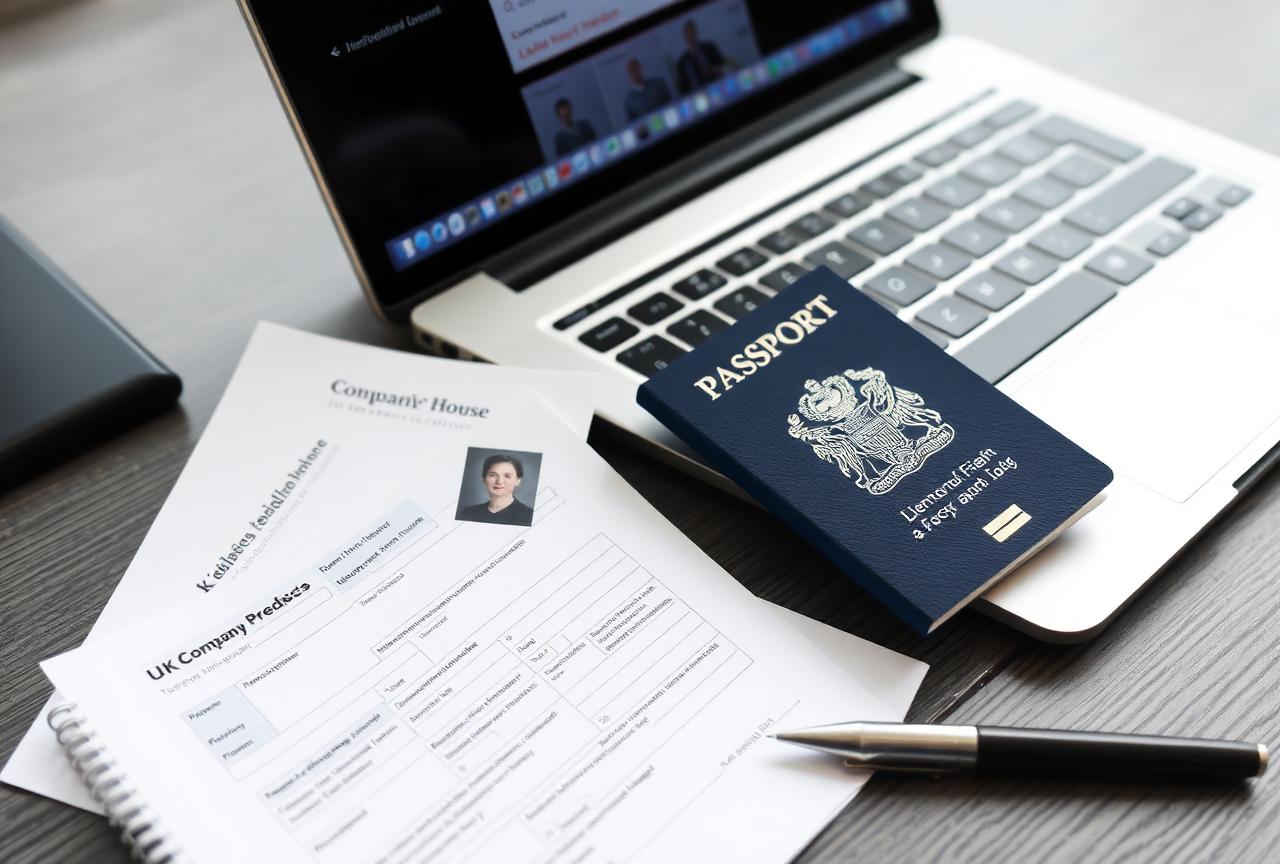
Identity Verification for UK Company Directors: A Practical Guide for Overseas Owners
How non-resident directors and PSCs of UK companies complete Companies House identity verification through an ACSP, what documents are accepted, and how to avoid rejected filings.
Kader Ameen · 27 July 2026 · 6 min read

Most of the UK companies we look after have at least one director living outside the United Kingdom — an American founder in London for part of the year, a family office in the UAE, a technology group in Singapore, a trading company owned from India. All of them are caught by the Companies House identity verification rules, and none of them need to travel to comply.
Why overseas directors get caught out
The obligation follows the appointment, not the residence. If you are named as a director or a Person with Significant Control of a company registered in England, Wales, Scotland or Northern Ireland, you must be verified regardless of where you live or what passport you hold. Filings made by or for an unverified person can be rejected, and rejection notices are often sent to a registered office address nobody is reading.
Accepted documents for non-residents
- A current passport from any country — the most straightforward option.
- A national identity card from an accepted jurisdiction, with both sides supplied.
- A residence permit or biometric card, where held.
- Proof of your residential address dated within three months: a bank statement, utility bill, tenancy agreement or municipal tax notice.
- A certified English translation where a document is issued in another language.
The process, step by step
- Send us the documents. Upload clear colour scans through our secure portal — no originals leave your hands.
- Book a short video call. Fifteen minutes, at a time that works in your zone, with one of our team.
- We run the check. Document authenticity, likeness and address are all confirmed and recorded.
- We submit to Companies House under our authorised provider reference.
- You receive your personal code and we log it against every company you are attached to.
Where it interacts with your tax position
Verification is a registry matter, but it rarely arrives alone. An overseas owner who has just verified as a PSC frequently has an open question about UK corporation tax on the company's profits, dividend withholding, a Self Assessment registration, or — for US persons — Form 5471 reporting on a controlled foreign corporation. Because the same team handles the US and UK sides of your affairs, those points get raised at the same time rather than a year later.
Frequently asked questions
I live abroad. Can I complete verification remotely?
Yes, entirely. The check is done by video call and secure upload; there is no requirement to attend in person or to post original documents.
What does it cost?
£125 per application, inclusive, with no VAT added. Company formation, confirmation statements and registered office services are quoted separately.
Does a corporate director need verifying?
A corporate entity cannot be verified as an individual; the relevant individual behind it must be verified instead, and the entity itself is subject to separate restrictions.
What if my address proof is not in English?
Provide the original plus a certified translation. We will tell you before the call whether the document you have will be accepted.
How quickly can this be done?
If your documents are ready, we can usually complete the check within two working days of you contacting us.
Have your passport and a recent proof of address to hand and contact our team — we will take it from there.